
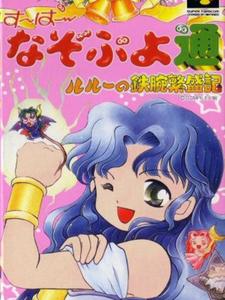
Super Nazo Puyo Tsuu: Rulue no Tetsuwan Hanjyouki
- First release
- Jun 26, 1996
- Developer
- Compile
- Publisher
- Compile
- Genres
- Puzzle · Fantasy
- Platforms
- Super Famicom, Satellaview
Attributes
Details
Storyline, release dates, time to beat, age ratings, modes, links, keywords
- Storyline
The game, similar to its predecessor Super Nazo Puyo: Rulue no Roux focuses on puzzle solving using standard Puyo Puyo gameplay. The player is tasked with varies clearing objectives using preset boards and pieces, ranging from clearing all of a specific color of Puyo, clearing all Nuisance Puyo, creating a specific chain length, clearing a certain amount of Puyo simultaneously, or simply clearing the whole board. Every time the player fails to complete a puzzle their health will decrease, as indicated by Rulue's expressions and the Puyo above her head slowly dipping below the bar. If the player loses all their health, the player will receive a Game Over and can choose to restart from the last character talked to or quit back to the title screen. Gauges on the right side of the screen will fill up with each completed puzzle and, once completely filled, will completely restore the player's health. The player can also climb and double rotate, and how many puzzles that need to be complete within each set is indicated by stars that fill up with each completed puzzle. Unlike its predecessor, the game adopts a RPG style with an overworld, NPCs, and items. As the player progresses through the game they have to complete quests in the overworld by retrieving items or talking to NPCs, exploring 6 major locations doing so; this causes the game to be less linear then its predecessor. The game is also saved in the menu, while its predecessor saves automatically.Read more
The game, similar to its predecessor Super Nazo Puyo: Rulue no Roux focuses on puzzle solving using standard Puyo Puyo gameplay. The player is tasked with varies clearing objectives using preset boards and pieces, ranging from clearing all of a specific color of Puyo, clearing all Nuisance Puyo, creating a specific chain length, clearing a certain amount of Puyo simultaneously, or simply clearing the whole board. Every time the player fails to complete a puzzle their health will decrease, as indicated by Rulue's expressions and the Puyo above her head slowly dipping below the bar. If the player loses all their health, the player will receive a Game Over and can choose to restart from the last character talked to or quit back to the title screen. Gauges on the right side of the screen will fill up with each completed puzzle and, once completely filled, will completely restore the player's health. The player can also climb and double rotate, and how many puzzles that need to be complete within each set is indicated by stars that fill up with each completed puzzle. Unlike its predecessor, the game adopts a RPG style with an overworld, NPCs, and items. As the player progresses through the game they have to complete quests in the overworld by retrieving items or talking to NPCs, exploring 6 major locations doing so; this causes the game to be less linear then its predecessor. The game is also saved in the menu, while its predecessor saves automatically.
- Release dates
- Satellaview
- Jun 26, 1996
- Super Famicom
- Jun 28, 1996
- Game modes
- Multiplayer, Single player
- Perspective
- Side view
- External links
- Twitch (opens in a new tab)Wiki (opens in a new tab)
- Keywords
- female protagonist

How it plays
Languages
- 日本語interface
Language data: IGDB · recorded 6 Nov 2026
Media
Screenshots
Videos
Community
Player reviews
Be the first to review
Behind the game
Related
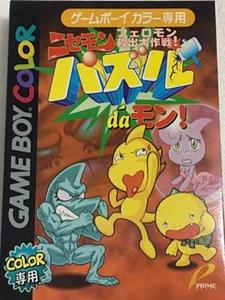
More in this franchise
Other games from the same franchise
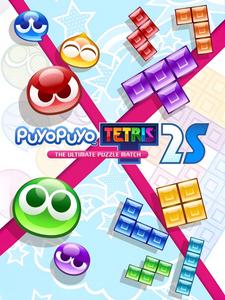 Puyo Puyo Tetris 2S2025, critic score 68
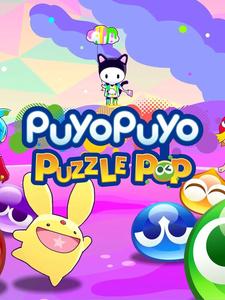 Puyo Puyo Puzzle Pop2024
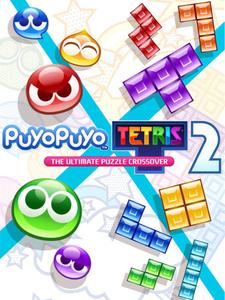 Puyo Puyo Tetris 22020, critic score 77
 Puyo Puyo Champions2018, critic score 72
 Puyo Puyo Chronicle2016
 Puyo Puyo Touch2015
 Puyo Puyo Fever Rhythm2014
 Puyo Puyo Tetris2014, critic score 84
 Puyo Puyo Fever: Minna de Nazo Puyo2013
 Puyo Puyo!! Quest2013
 Puyo Puyo!! 20th Anniversary: Mini Version2012
 Puyo Puyo Narabe2012
 Puyo Puyo!! 20th Anniversary2011
 Puyo Puyo 72009
 Puyo Puyo! The Medal Edition2009
 Puyo Puyo Solitare2008
 Sega Splash! Golf2008
 Sega Superstars Tennis2008, critic score 69
 Puyo Puyo! 15th Anniversary2006, critic score 70
 Puyo Puyo Zurashi2006
